Thinking & Decisions

The Fractal of Understanding: Why Knowing Feels Infinite

I don’t think I’ll ever be able to fully believe in quantum physics, let alone radio waves. Take language models, for example. How can anyone believe that large language models actually work? Yet, the...

Varun Rao
Varun Rao
2025-06-10·2 min read
The Fractal of Understanding: Why Knowing Feels Infinite
Editorial visual for The Fractal of Understanding: Why Knowing Feels Infinite

I don’t think I’ll ever be able to fully believe in quantum physics, let alone radio waves. Take language models, for example. How can anyone believe that large language models actually work? Yet, they perform astonishingly well. People say the magic lies in backpropagation. But since I haven’t implemented it from scratch, I find it difficult to convince myself that it really works.

There has been a lot of work done on backpropagation in systems engineering, particularly in optimization for faster training. However, the codebases are often large and complex. Understanding them can take months of dedicated self-study. I have a mental limitation: unless I see or build something from scratch, I struggle to accept it as true.

The entire AI ecosystem is a complicated mix of technologies, starting from hardware and extending all the way to high-level software libraries. There are many intermediate layers, and anyone entering the field often feels they only understand a small part of it. What makes it even harder is the presence of many so-called AI gurus, whose claimed expertise seems to stretch beyond the timeline of AI itself.

The same challenge applies to biology. I understand that there is a vast amount happening within human cells. All I can observe are the abstract effects, like the chills I feel when I fall in love. I do not have access to genetic sequencing machines or advanced academic training in biology, so I cannot witness the inner workings of stem cells directly. Of course, I can read articles, research papers, or look at diagrams online, but they do not truly satisfy me.

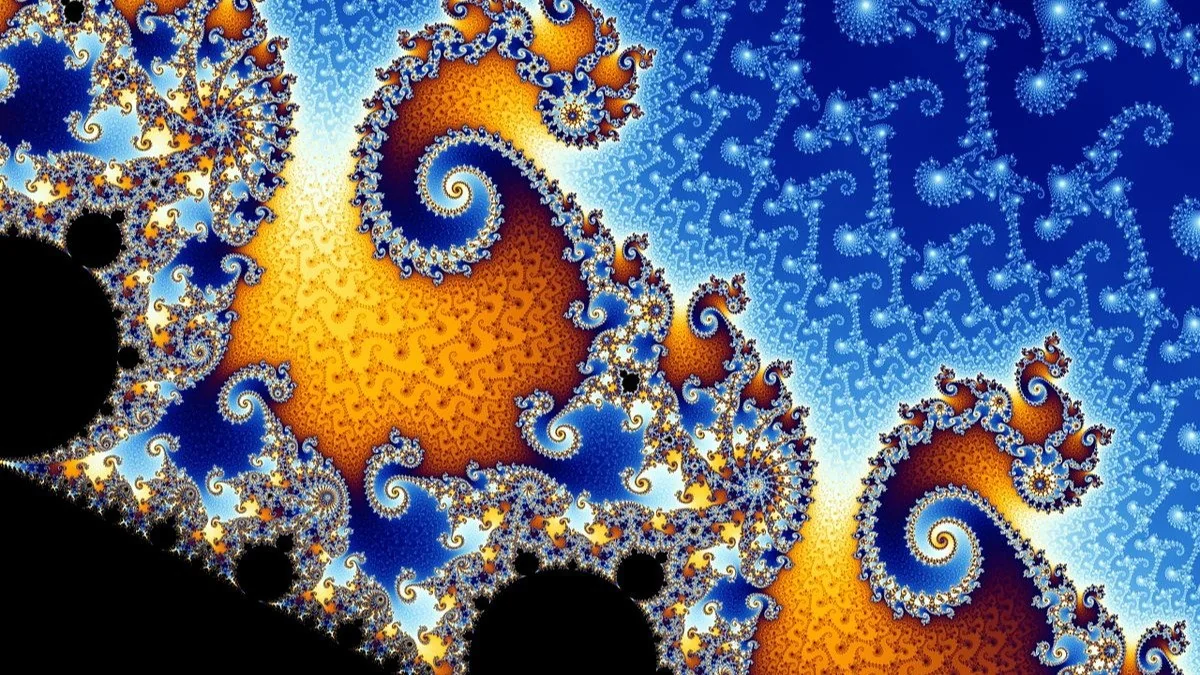
Everything we encounter is turning into a specialized field of study, much like a Mandelbrot fractal. The deeper we look, the more complexity we find.
· · ·
Varun Rao

Varun Rao

Writer & Technologist

Writing on careers, AI autonomy, mental models, and the evolving nature of work. If this essay made you reflect, explore the topic hub or subscribe for periodic dispatches.

Dialogue & Amplification

Share this Essay

If this piece prompted reflection, challenged your assumptions, or provided value, share it with colleagues or start a discussion on LinkedIn.

Discussion

0

Join the conversation

Sign in with Google to post your thoughts, reply to other readers, and like insightful reflections.

No comments yet.

Be the first to share an insight or question.

Related ExplorationsAll essays →

Unit tests for life

Unit tests for life are small dosages of crafted sentences that makes you think and deeply reflect about your own circumstance. It should not be taken as checklist to carry around.

·2 min read

The thinking tools to understand daily events

This principle of physics has much relevance in our day-to-day life. People who behave and believe in something will continue to operate similarly unless something dramatic happens in their lives. It also means that changing beliefs needs effort; the push to change the beliefs may come from internal conflicts or external pressure. Equilibrium is a state where opposing forces that are acting on a body cancel each other out. One can stand still on a floor because the floor is exerting an equal and opposite force on him. The initial excitement fades in marriage, and over time, both settle into unwritten agreements. On either side, the behavior shifts to reduce psychological pain, such as disappointments, and to maximize the pleasure until it reaches an equilibrium.

·3 min read
The Fractal of Understanding: Why Knowing Feels Infinite — Varun Rao — Varun Rao