Unit tests for life
Unit tests for life are small dosages of crafted sentences that makes you think and deeply reflect about your own circumstance. It should not be taken as checklist to carry around.
·2 min read
Why can we only remember the past and not the future? This question might seem puzzling, but questions like these can liberate us from mundane everyday problems, if only for a moment. For me, they are...
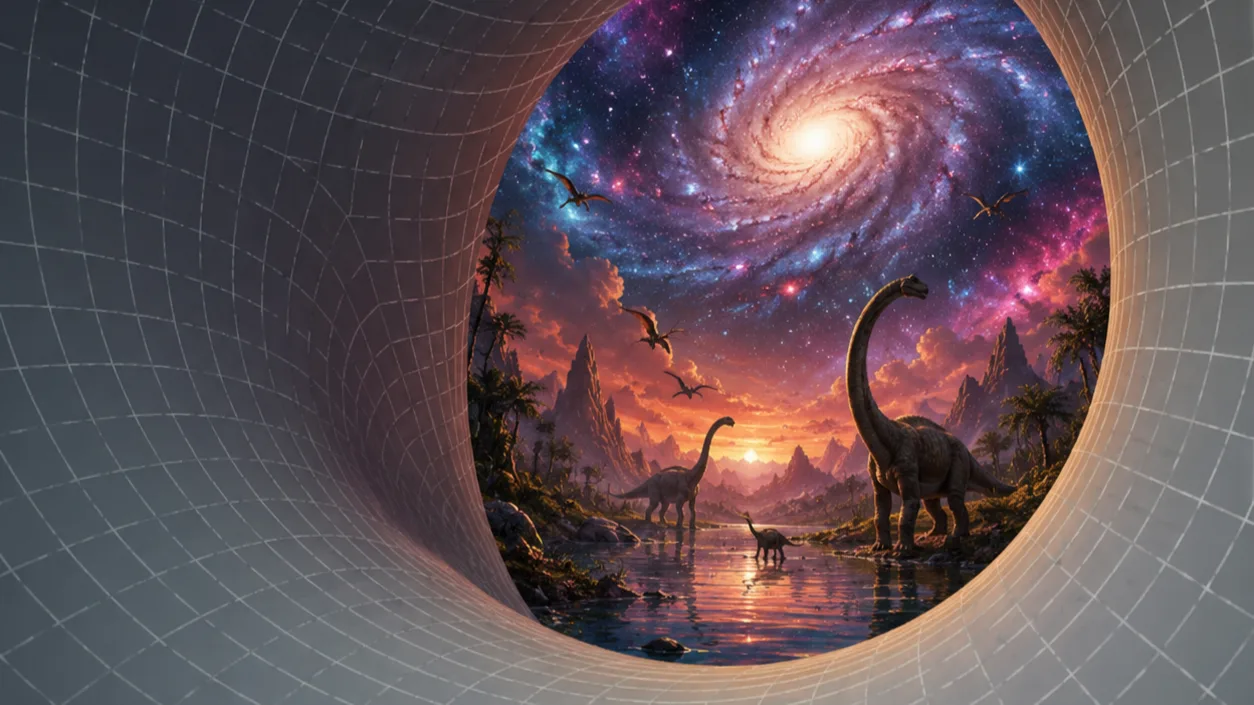
Why can we only remember the past and not the future? This question might seem puzzling, but questions like these can liberate us from mundane everyday problems, if only for a moment. For me, they are a kind of spiritual journey. I fly all the way back to the age of dinosaurs and then fast-forward through time to the day the Sun becomes a red giant, cools, and dies. It is partly fantasy and partly an out-of-body experience; without drugs.
When a glass jar slips from your hand and shatters into pieces, pause for a moment. Do not rush to clean up the mess. Instead, consider that this jar is made up of tiny atoms. One particular arrangement of these atoms gives rise to the very jar you just broke. Yet, using the same atoms, there are countless, perhaps effectively infinite, other arrangements that are possible. Millions of millions of times if those pieces are mixed up again and again, we might end up getting the Jar back.
Out of the same atoms, through the process of evolution, a brain came into existence. What kind of properties might such a brain possess? Before we can answer that, we first need to understand what evolution is. Evolution is the process by which life originated and propagated. But perhaps we need to define what life is even before we talk about evolution. Life is a particular arrangement of atoms came into existence which can fix itself unlike the jar. It was indeed mixed amino acids again and again and ended up with what we call living being.
This incredible complexity of the universe is the result of the astonishing activity taking place beneath the surface. I may doubt my own existence, but it is much harder to deny the existence of the physical substance I see all around me. Either matter exists, or we, the observers, do. If we say that matter is eternal, we immediately run into another question: where does matter exist? It exists in space. Then we are led to believe that both matter and space exist.

Writer & Technologist
Writing on careers, AI autonomy, mental models, and the evolving nature of work. If this essay made you reflect, explore the topic hub or subscribe for periodic dispatches.
Unit tests for life are small dosages of crafted sentences that makes you think and deeply reflect about your own circumstance. It should not be taken as checklist to carry around.
This principle of physics has much relevance in our day-to-day life. People who behave and believe in something will continue to operate similarly unless something dramatic happens in their lives. It also means that changing beliefs needs effort; the push to change the beliefs may come from internal conflicts or external pressure. Equilibrium is a state where opposing forces that are acting on a body cancel each other out. One can stand still on a floor because the floor is exerting an equal and opposite force on him. The initial excitement fades in marriage, and over time, both settle into unwritten agreements. On either side, the behavior shifts to reduce psychological pain, such as disappointments, and to maximize the pleasure until it reaches an equilibrium.
Just like photons, when we think deeply or introspect, ideas rarely appear in a straight line. Our thoughts scatter, loop back, get lost, and re-emerge in new forms before clarity comes. In our minds, insights often take a long incubation period. We may struggle, reflect, let things rest, and only after much inner wandering does a clear realization finally surfaces. Once an insight finally forms, it can feel sudden and obvious, like “Why didn’t I see this earlier?” even though the mind worked on it for a long time beneath awareness.
Discussion
0Join the conversation
Sign in with Google to post your thoughts, reply to other readers, and like insightful reflections.
No comments yet.
Be the first to share an insight or question.